Showing posts with label South America. Show all posts

Saturday, November 17, 2012

Malpelo Island (HK0NA) on 10m SSB

This is the eQSL of a QSO with Malpelo Island (HK0NA) on 10m SSB.
I made this QSO thanks to Quique (EA1DFP). I was at home when he phoned me to tell me about the spot. As I don't have an HF antenna at home, I went down to my car to try the QSO, and was lucky to make it at the first try. There was no pile-up.
Malpelo is a small island in the East Pacific Ocean, located about 500 km (310 mi) west of the Colombian mainland. Except for a small military post that is manned by the Colombian Armed Forces, it is uninhabited. It consists of a sheer and barren rock with three high peaks, the highest being Cerro de la Mona with a height of 300 metres (980 ft).
Malpelo is home of a unique shark population; swarms of 500 hammerhead sharks and hundreds of silky sharks are frequently seen by diving expeditions, making it a very popular sharkdiving location.

Thursday, February 23, 2012

Island of Antigua (V25WY)

This is a video of a QSO with teh Island of Antigua on 17m SSB. Bob W4OWY and Tom AA9A were active as V25WY and V25AA respectively from Antigua between February 14 to 22, 2012. They were on 160 – 10m, SSB, CW and maybe RTTY. QSL via bureau or direct to home calls.

Antigua was first settled by Archaic Age hunter-gatherer Amerindians, erroneously referred to as Siboney or Ciboney. Carbon-dating has established that the earliest settlements started around 3100 BC. They were succeeded by the Ceramic Age pre-Columbian Arawak-speaking Saladoid people who migrated from the lower Orinoco River.

Thursday, February 16, 2012

Bonaire (PJ4J)

This is an eQSL of a QSO with Bonaire station PJ4J on 17m SSB. OS1T (ON4CIT) was active from Bonaire Island, 27 October - 9 November 2011 as PJ4J.
The Caribbean island of Bonaire, together with Aruba and Curaçao forms a group referred to as the ABC islands of the Leeward Antilles, the southern island chain of the Lesser Antilles. The name Bonaire is thought to have originally come from the Caiquetio word 'Bonay'. The early Spanish and Dutch modified its spelling to Bojnaj and also Bonaire, which means "Good Air".Bonaire was part of the Netherlands Antilles until the country's dissolution on 10 October 2010,[5] when the island (including Klein Bonaire) became a special municipality within the country of the Netherlands.

Saturday, February 11, 2012

YN2N (Nicaragua) on 15m

This is a video of a QSO with Nicaragua from my car, using a Yaesu FT-857D with a 4m-long whip antenna.

THe antenna tuner is a Yaesu FC-40, which tunes the whip from 7Mhz up.

Saturday, June 4, 2011

Uruguay on 12m: CX2DK

I haven't checked my eQSL account for a long time and when I opened my inbox today I found I had a number of very nice eQSLs waiting, like the one on the picture from Marcelo (CX2DK) in Uruguay, for a QSO on 12m SSB.
I also found out that I already have 78 DXCC entities confirmed, so now I have to go for the 100...

Tuesday, August 3, 2010

Some eQSLs for my collection

Today I made several QSOs on the 6m band and I have already received this beautiful card from Belgian station ON7KC.
I also made QSOs on that band with Denmark (5P1DX), Germany (DL1JEK) and Scotland (MM0TFU), and some others on 10m (Germany, Switzerland and the Netherlands), 12m (France) and 15m (Italy), using a 4m whip with the Yaesu FC-40 antenna tuner.
I also received another nice eQSL from Brazilian station PY2VM (operator: Carlos) for a QSO on the 17m band.
I also made a QSO this evening on the 15m band with a German amateur who was on holiday in Goiania, Brazil. I was on the car park of a German supermarket (Lidl) where I bought some NiMH rechargeable batteries.

Saturday, June 19, 2010

Another 10k on 15m (LU2DO)

Last Thrsday I made another 10k QSO, in this case with Argentinian station LU2DO (Andrés) from the city of Pilar. I also made a QSo with Brazil (PY2CX) and Ukraine (UY3LA).
Nick (UY3LA) from Lozovaya also made a contact with José Luis (EA1HNP) later that day and told him about our QSO. Then José Luis sent me a text message and we talked about it on 2m and 10m.
Lozova (Ukrainian: Лозова, Russian: Лозовая, translit. Lozovaya) is a city in the Kharkiv Oblast (province) of eastern Ukraine. Serving as the administrative center of the Lozivsky Raion (district), the city itself is also designated as a separate raion within the oblast, and is an important railroad junction in the oblast.
The current estimated population is around 64,300 (as of 2001).This makes Lozova the 2nd largest city in Kharkiv Oblast after Kharkov. The city was evacuated on August 27, 2008 due to a fire in a military warehouse. However there were no serious casualties and deaths.

Thursday, June 17, 2010

The Falklands on 15m (VP8LP)

Yesterday I made some QSOs on the 20m, 17m and 15m bands. On this latter band I made a contact with the Falkland Islands (VP8LP) and got a signal report of 54. With a distance of 11,500km, that can be considered real DX, especially for 100w and a vertical antenna.
It was a quick QSO but I heard Bob (VP8LP) talking about the weather with some Dansh colleague (5P5BK), and he said it was snowing there in the Falklands.

Saturday, March 27, 2010

Brazil on 15m (PY5QW)

This is a video of a QSO with Bazilian station PY5QW (operator: Vigand) from Curitiba on the 15m band.

As he reminded me, I had already made a QSO with him on 25 February on the 20m band. Vigand also sent me a picture of the impressive location of his station in Curitiba.
One theory about the name "Curitiba" comes from the Tupi words kurí tyba, "many pine seeds" due to the large number of seeds of Paraná pines in the region prior to its foundation. The other version, also from the Tupi language, comes from the combination of kurit (pine tree) and yba (large amount).
The history of Curitiba is marked by waves of European immigrants that started arriving after 1850, mainly Germans, Italians, Poles and Ukrainians. In 1853, the south and southwest of the province of São Paulo were separated, forming the new province of Paraná, and Curitiba became its capital.

Thursday, February 25, 2010

Poland: Thirteenth country confirmed with the 320

Today I received an eQSL for a QSO on the 15m band with Polish station SP7IDX (Waldi). This makes the thirteenth countru confirmed for my eDX award.
Today I also met José Luis (EA1HNP) and made some QSOs with the FT857D because the weather was too bad for staying outside with the PRC-320. I made a QSO with Canadian station VE7FE (Jurgen) on the 15m band. Then I moved to 20m and made a QSO with Brazilian station PY5QW (operator Vigand) from Curitiba and another one with KC2R (Bernie) from Central New York.
Bernie was first licensed in 1954 as ZB1CO on the island of Malta. Royal Corps of Signals, British Army. His second call was DL4NT ( & club station DL4ACW ) with the U.S. Air Force, Germany, 1956 - 1959. His first U.S. call was WB2GJN in 1963. Finally, he has held his present call, KC2R, since 1979.

Tuesday, February 2, 2010

From Argentina to South Africa

Today I made a couple of QSOs with the FT857D because it was too cold to stay outside with the PRC-320. The first one was on the 15m band with LU4VL (operator Juan) from the province of Río Negro, in the South of Argentina. Juan told me it was sunny and very hot over there, and that he was working with an old FT101ZD, a linear amplifier at 600W and a multiband yagi 25m above the ground.
The second QSO was on the 20m band with the South African station ZS6CCY (operator Bill). First licenced ZE1DX in 1970 in what was formerly Rhodesia and trained in radiocommunication engineering, he moved to Perth, Western Australia, in 1981 as VK6ACY. Over there he ran a successful radio networking and high site business. But 20 year past-time of photo graphic safaris on the Zambezi River,Lake Cahora Bassa-Mocambique and the Okavango Delta, Botswana, led to full time game ranching in the Waterberg area of South Africa upon returning home in 1999. Previously keen on EME, he conducted the irst Africa/USA 144Mhz EME in May 1975 with WA6LET. His favourite bands now are 20 and 75 with a 6 element monoband yagi at 95ft and a full size 4 square respectively. The picture shows the base of one of the 75m 4 square vertcals.

Saturday, November 14, 2009

Senegal

Last Saturday I made three brief qso's from my car, all of them in 15m with a 4m-long whip antenna. Two of them with South America (Uruguay and Brazil) and another one with Senegal (6V7S).
Senegal is a country south of the Sénégal River in western Africa. Senegal is bounded by the Atlantic Ocean to the west, Mauritania to the north, Mali to the east, and Guinea and Guinea-Bissau to the south, and it also encircles The Gambia on its three sides, except that of the Atlantic Ocean.[4]
Its size is almost 197,000 km² with an estimated population of about 12.5 million. Dakar is the capital city of Senegal, located on the Cape Verde Peninsula on the country's Atlantic coast.
Archaeological findings throughout the area indicate that Senegal was inhabited in prehistoric times.

Saturday, April 4, 2009

Grecia: ¿el país número 50?

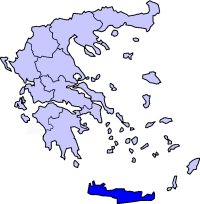
Hoy me llegó la eQSL del amigo SV9DJO, de Creta. En eQSL me aparece como Grecia en lugar de Creta, pero puede tratarse de un error, y Creta ya lo tenóia, así que todavía no me hago muchas ilusiones.
Georgios estudió ingeniería de radiocomunicaciones en la Universidad Técnica de Sofía, Bulgaria y luego un másteer en la Universidad de Portsmouth.
Creta (en griego Κρήτη / Kriti) es una isla situada en el mar Egeo, la isla más grande de Grecia y la quinta en tamaño del mar Mediterráneo, también conocida hasta inicios del siglo XX con el nombre de Candia topónimo deriva del latín candidus (blanco) que le fue dado durante el medioevo inicialmente por los marinos y comerciantes italianos por la blancura de su tierra era llamada "cándida".
Otros contactos del jueves fueron Georgia, Gabón, las Malvinas y Turquía.

Friday, March 13, 2009

Nova Gorica

Hoy hice un contaacto con la estación S51ZZ (operador Vojko) de Nova Gorica. Era mi tercer contacto con el amigo Vojko, al que siempre oigo con una señal extraordinaria.
Nova Gorica (población: 13.852 (pueblo); 22.000 (incl. alrededores); 31.000 (municipalidad)) es un pueblo y una municipalidad en el oeste de Eslovenia, junto a la frontera norte italiana. Nova Gorica es un pueblo reciente, fundado en 1948, cuando el tratado de paz con Italia en 1947 acordó una nueva frontera entre Yugoslavia e Italia, dejando a la ciudad de Gorizia fuera de los límites de Yugoslavia y por lo tanto separando la zona del valle inferior del Vipava de su centro regional. Nova Gorica es el principal centro urbano de la región de Goriška en el litoral esloveno.
Hoy también hice un cotacto con Marco (PY1SX) de Rio de Janeiro. Anca, por su parte, hizo un contacto en la banda de 15m con la estación VP8LP (operador Bob) de las Islas Malvinas.

Thursday, March 12, 2009

De Indonesia a las Malvinas

Hoy fue un buen día en cuestión de DX puesto que me apunté dos buenos contactos, ambos en la banda de 15 metros. El primero fue con la estación YC1LA (operador Hen) de Bandung, Indonesia. Este supone mi primer contacto con Oceanía con el nuevo indicativo, aunque no me me reportará por ahora el punto del nuevo país ya que todavía no tiene garantía de autenticidad en eQSL. La distancia: 12.631 km.
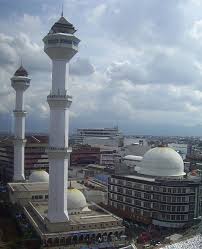
Bandung es la capital de la provincia indonesia de Java occidental y la cuarta ciudad más grande de Indonesia con 2.510.982 habitantes. Está situada a 768 metros (2520 pies) sobre el nivel del mar.
Los colonos holandeses crearon plantaciones de alrededor de las montañas en el siglo XVIII, enseguida empezaron la construcción de una carretera que conectaba las zonas de plantación con capital (180 kilómetros al noroeste). Los habitantes de origen europeo de la ciudad, exigiieron la creación de un municipio, que se concedió en 1906 y Bandung fue desarrolladose gradualmente. Se construyeron lujosos hoteles, restaurantes, cafés y abrieron tiendas para la poblacion europea.
El segundo fue con la estación VP8LP (operador Bob) de las Islas Malvinas. Este país no es nuevo, pero sí espero que me suponga un nuevo tanto para el eDX100. La distancia: 11.592 km.
Otros contactos del día fueron la República de Georgia, la República de Moldavia y Argelia, todos en la banda de 20m. En esa misma banda también hizo Anca (EA1/YO8SOY) un contacto con Croacia.

Monday, February 23, 2009

De Madeira a Martinica

Por la mañana hice un contacto con la estación CT9L de Madeira y también un par de contactos con Suecia (uno de ellos en CW), país que aún no tengo confirmado por eQSL. También intenté hacer el contacto con la estación YB3OX de Indonesia, que se oía muy bien. Este qso me hubiese significado el WAC con mi nuevo indicativo, pero el pile-up que se formó lo hizo imposible.
Por la tarde tuve más suerte, aprovechando las últimas horas de propagación en la banda de 20m, pudiendo conseguir un contacto con la estación FM/KL7WA de Martinica. También hice sendos contactos con Brasil (PY6HD) y Argelia (7X5RS).
Otros contactos del día fueron Rusia, Estados Unidos, Italia, Croacia y Alemania (este último en CW).

Thursday, February 19, 2009

De Siberia a Brasil

Hoy fue un día cargado de contactos. Por la mañana empecé fuerte, con un qso con la estación RZ9OW (operador Vlad) de Novosibirsk, la capital de Siberia.
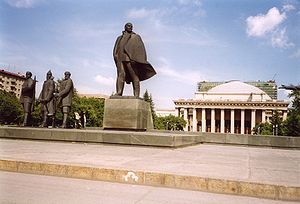
Novosibírsk (ruso: Новосибирск) es la capital del óblast de Novosibirsk, y la tercera ciudad más grande de Rusia, después de Moscú y San Petersburgo. Con una población de 1.425.508 habitantes (según el censo de 2002), se encuentra al sudoeste del Distrito Federal Siberiano a 55°01′N 82°56′E / 55.017, 82.933, a orillas del río Ob. Tiene la más grande estación de trenes a lo largo de la ruta del ferrocarril transiberiano, la mayor biblioteca de Siberia y el más grande teatro de ópera y ballet de toda Rusia (superando incluso al famoso Teatro Bolshói de Moscú). También se encuentra en Novosibírsk la Catedral de San Alejandro Nevski, considerada uno de los más finos ejemplos de la arquitectura de la iglesia ortodoxa rusa.
Poco después llegó un contacto con el otro extremo del mundo, PY2SEI (0perador Paulo) de cerca de Sao Paulo.
El día también estuvo repleto de islas, como Lampedusa (IG9/IW9ELR), Shetland (GM4SSA) y Orkney (MM3LQK). Lampedusa es la más grande de las islas del archipiélago de las Pelagias en el Mar mediterráneo. Se encuentra a 205 km de Sicilia y a 113 km de Túnez siendo el territorio italiano ubicado más al sur. Política y administrativamente pertenece a Italia, pero geográficamente pertenece a África ya que el lecho marino entre ambos no excede los 120 metros de profundidad. Los 20 km² de Lampedusa son áridos y sin fuentes de agua que no sean las irregulares lluvias. La isla tiene una población de 5500 personas que subsisten de la pesca, la agricultura y el turismo. Durante la Segunda Guerra Mundial la isla fue rápidamente invadida por fuerzas británicas durante la Operación Corkscrew.
Otros contactos del día fueron Kazajstán, Rusia (en CW), Canadá y Bulgaria. También repetí qso con Russell (CN2XW), que está de expedición en Marruecos.